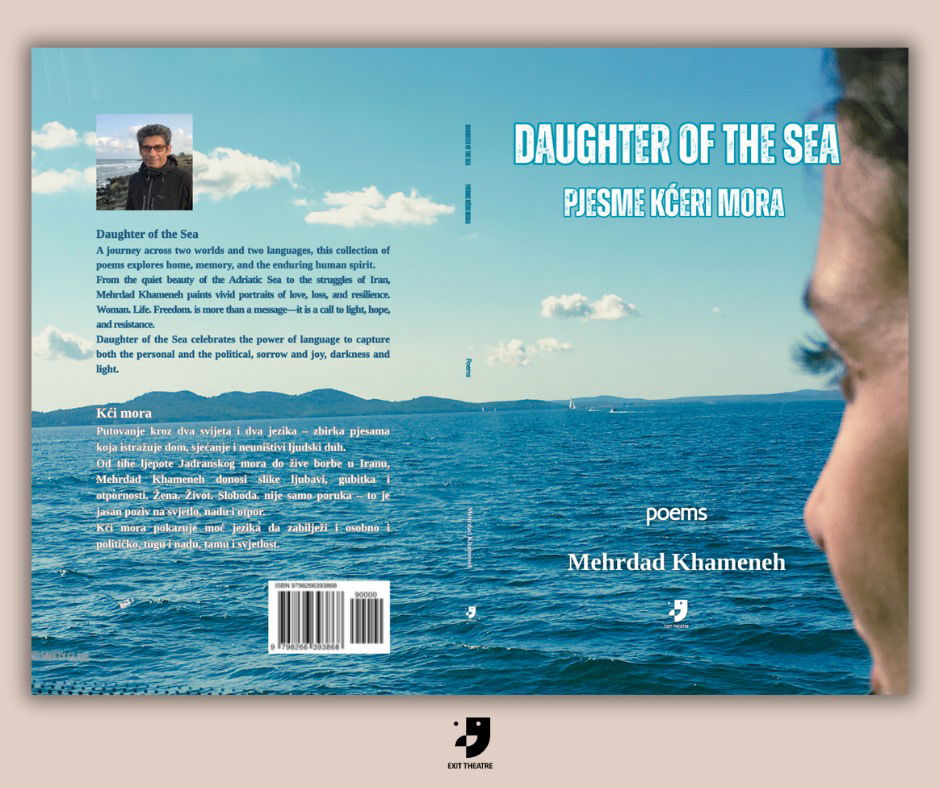
Daughter of the Sea / Pjesme kćeri mora poems
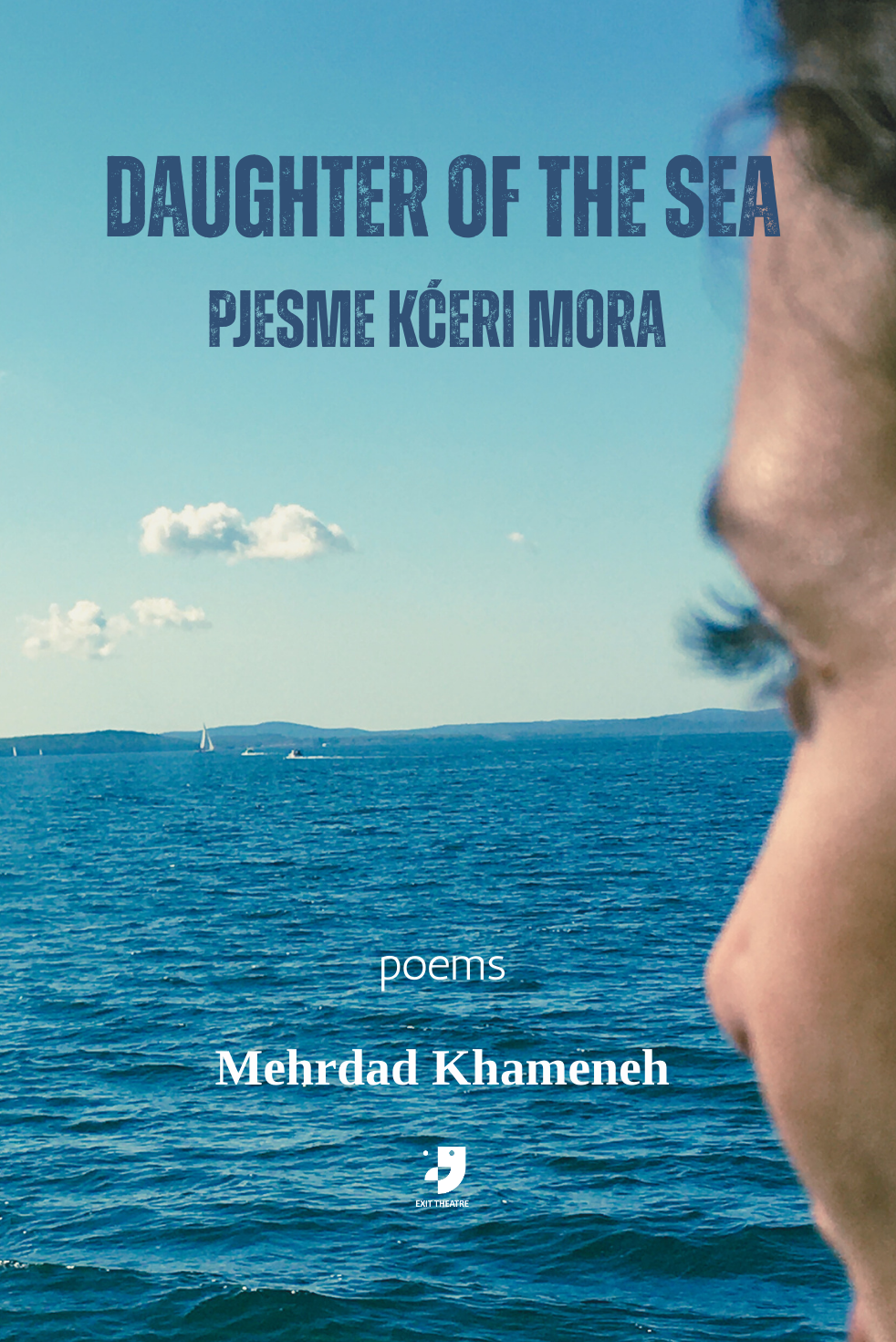
Daughter of the Sea / Pjesme kćeri mora poems
by Mehrdad Khameneh
Amazon Books:
https://a.co/d/87NG06t
Between Sea and History / Između mora i povijesti
A Review of Daughter of the Sea / Recenzija Kćeri mora
By Shiva Kakpour
Mehrdad Khameneh’s Daughter of the Sea moves between two worlds—the intimate landscape of the Adriatic, with its metaphysical reflections on language, memory, and love, and the brutal political reality of Iran from 2019 to 2025, where the slogans of “Woman. Life. Freedom.” emerge against death, repression, and exile. The book, written bilingually (English and Croatian), is not merely a collection of poems but an archive of displacement, testimony, and philosophical meditation.Philosophical DimensionThe first part, “Daughter of the Sea,” is deeply indebted to thinkers like Wittgenstein and phenomenological traditions. Poems such as The Limit of My Language explicitly engage with Wittgenstein’s dictum that “the limits of my language mean the limits of my world,” but Khameneh transforms this into a poetics of excess—where what cannot be said still reverberates in silence. Mirror and The Frame of Silence further explore the boundaries between appearance, essence, and truth, echoing Heidegger’s notion of “aletheia” (unconcealment). The sea itself becomes a metaphysical figure—at once boundless freedom and unfathomable depth, a metaphor for the unfinished horizon of subjectivity.Yet this metaphysical imagery is never detached from human experience. The poems are haunted by exile: “Home is not where you opened your eyes, / but where you closed them / to the urge to flee” (Home). Here, “home” is not a fixed geography but a phenomenological condition—the reconciliation of flight and arrival within the self. The philosophical register thus intertwines with existential displacement, giving the Adriatic its symbolic weight as both sanctuary and threshold.Sociological DimensionThe second part, “Woman. Life. Freedom.”, shifts radically from metaphysical seascapes to the social and political traumas of Iran. Through testimonial fragments—of miners in Tabas, of mothers mourning Khavaran, of young women like Armita Geravand and Mahsa Amini—Khameneh situates poetry as a counter-archive to state erasure. Sociologically, these poems function as a collective memory-work, preserving voices silenced by authoritarian power.Poems such as Verdict and Execution document judicial violence and everyday oppression, while Falafel Sandwich and Numbing the Pain turn to the sociology of poverty and bodily suffering. They depict how structural deprivation (hunger, homelessness, medical neglect) collapses into intimate violation, forcing readers to confront the systemic production of humiliation.The refrain “Woman. Life. Freedom.” operates here not only as a political slogan but as what Durkheim would call a “social fact”—a collective symbol that organizes resistance, identity, and mourning. It embodies the transformation of private grief into public solidarity, showing how poetry can become both a mirror of society’s wounds and a catalyst for imagining emancipation.Balancing the Two WorldsWhat makes Daughter of the Sea compelling is precisely its oscillation between the Adriatic and Tehran, between lyrical philosophy and sociological testimony. Neither world is reduced to the other: the sea does not erase the brutality of prisons, nor does political testimony nullify the metaphysical search for meaning. Instead, Khameneh insists on their coexistence. The book suggests that to write about freedom, one must speak both in the language of corals and storms, and in the cries of those executed and disappeared.From a philosophical angle, the text wrestles with the limits of language and being. From a sociological one, it bears witness to the structures of violence and survival. Between the two, Daughter of the Sea creates a poetics of resistance grounded in both ontology and history.
September 21, 2025