Art at the Barricades: Aesthetics in the Political History of Art
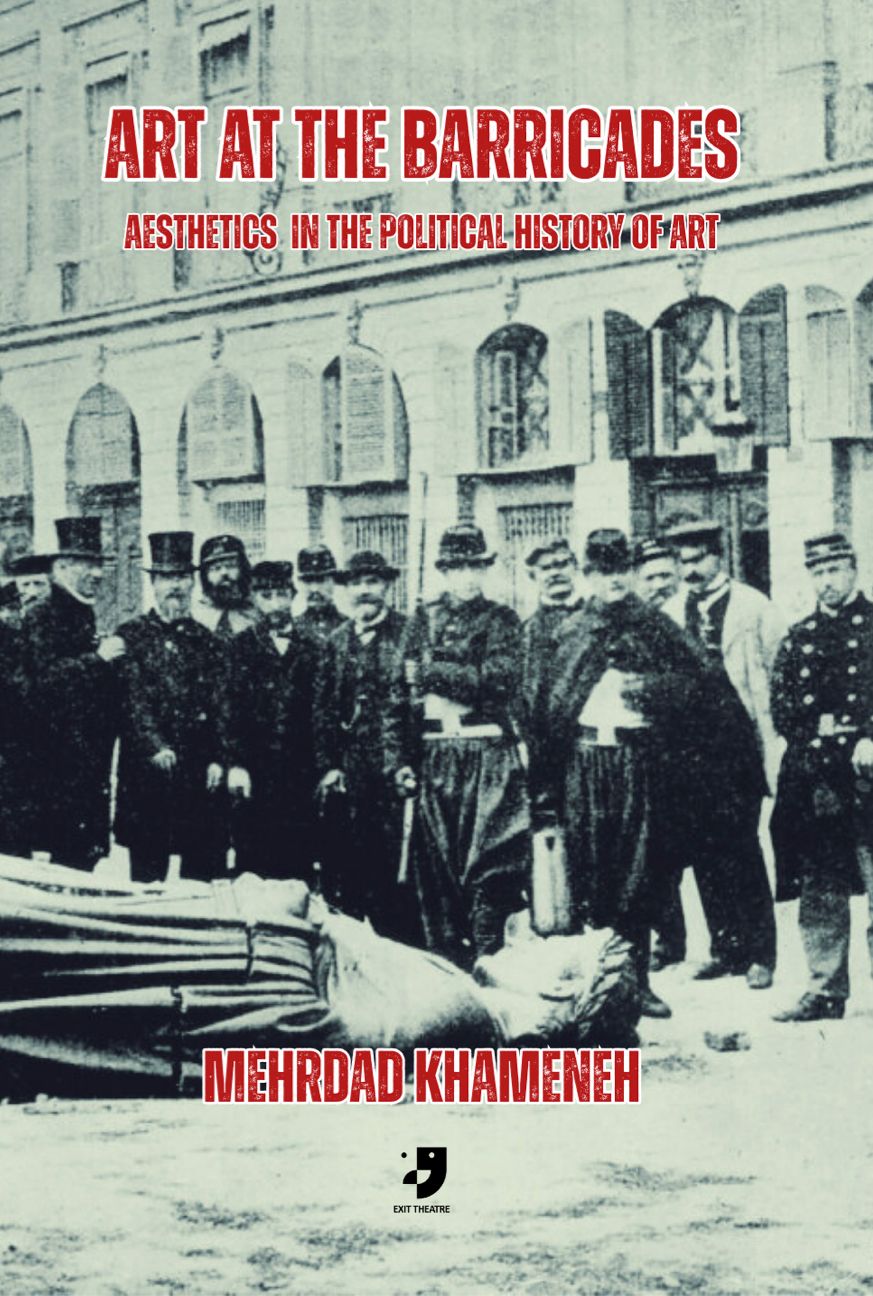
Art at the Barricades: Aesthetics in the Political History of Art
By Mehrdad Khameneh
Available on Amazon Books
https://a.co/d/bbbnBpd
Dedication
To Gustave Courbet and the artists of the Paris Commune, 1871
In Art at the Barricades, Mehrdad Khameneh offers a bold and expansive history of art’s political entanglements. This is not a survey of styles or movements but a manifesto in the form of cultural history—an argument that art has always been on the frontlines of power, either in service of domination or in defiance of it.The book’s opening essay, “Art at the Barricades,” sets the tone. Khameneh revisits iconic works of revolutionary imagery—from Delacroix’s Liberty Leading the People to Rivera’s The Arsenal—and situates them within broader histories of struggle, including Iran’s Constitutional Revolution. For him, art is never merely representational; it is constitutive of revolution itself, its brushstrokes and verses inseparable from the barricades they depict.The second chapter, “Aesthetics in the Political History of Art,” digs deeper, examining how definitions of beauty have been shaped by power. Khameneh contrasts the divine idealism of the Renaissance with Caravaggio’s human rawness, and ultimately with Courbet’s realism, where scandal lay in nothing more than a pair of unwashed feet. His argument is clear: beauty is not universal but socially contingent, determined by class, politics, and ideology.Subsequent essays extend this theme across different forms. In “The Feminism of Ludwig van Beethoven,” the composer’s Fidelio emerges as an unexpectedly radical work, placing a woman at the center of resistance against tyranny. “Censorship of Nudity in American Cinema” reframes Hollywood’s Production Code as a repressive apparatus, turning the human body into a site of ideological policing. “The Choice of Mephisto” reflects on the compromises of artists under fascism, probing the costs of survival in authoritarian contexts.Khameneh’s cultural sweep is impressive. The chapter on Rainer Werner Fassbinder situates the German filmmaker as a romantic rebel, heir to Brecht’s critical theatre yet fiercely personal in his aesthetic. Ivo Brešan and Atelier 212 Belgrade receive attention as well, showing how satire and theatre created spaces of resistance in the Balkans. The book concludes with the Manifesto of the Artists of the Paris Commune, returning to Courbet and 1871 as a symbolic anchor for the entire study.What unites these disparate case studies is Khameneh’s insistence that art cannot be neutral. When aligned with power, it becomes propaganda. When aligned with people, it becomes a weapon of liberation. He is careful not to romanticize resistance: Courbet died in exile, Brecht was hounded by McCarthyism, Iranian artists continue to face imprisonment. Yet these histories of repression, he argues, only confirm art’s potency. If art were harmless, it would not be so persistently censored, co-opted, or feared.Khameneh’s prose is both accessible and rigorous. He moves comfortably from Renaissance frescoes to Hollywood cinema to Iranian revolutionary poetry without losing his reader. The book is at once historical and urgent, deeply researched yet written with the conviction of someone who sees these questions as matters of life and death.For a contemporary art world often preoccupied with markets and spectacle, Art at the Barricades is a reminder of art’s deeper stakes. It challenges artists to reconsider their roles, critics to confront their blind spots, and readers to recognize that every work of art is part of a political economy of meaning.Ultimately, the book’s greatest strength is its refusal to separate aesthetics from ethics. In doing so, it places itself in a lineage of critical writing that insists art is not an escape from history but one of its most contested arenas. As Khameneh persuasively shows, the barricades are never far away—and art will always find itself there.
